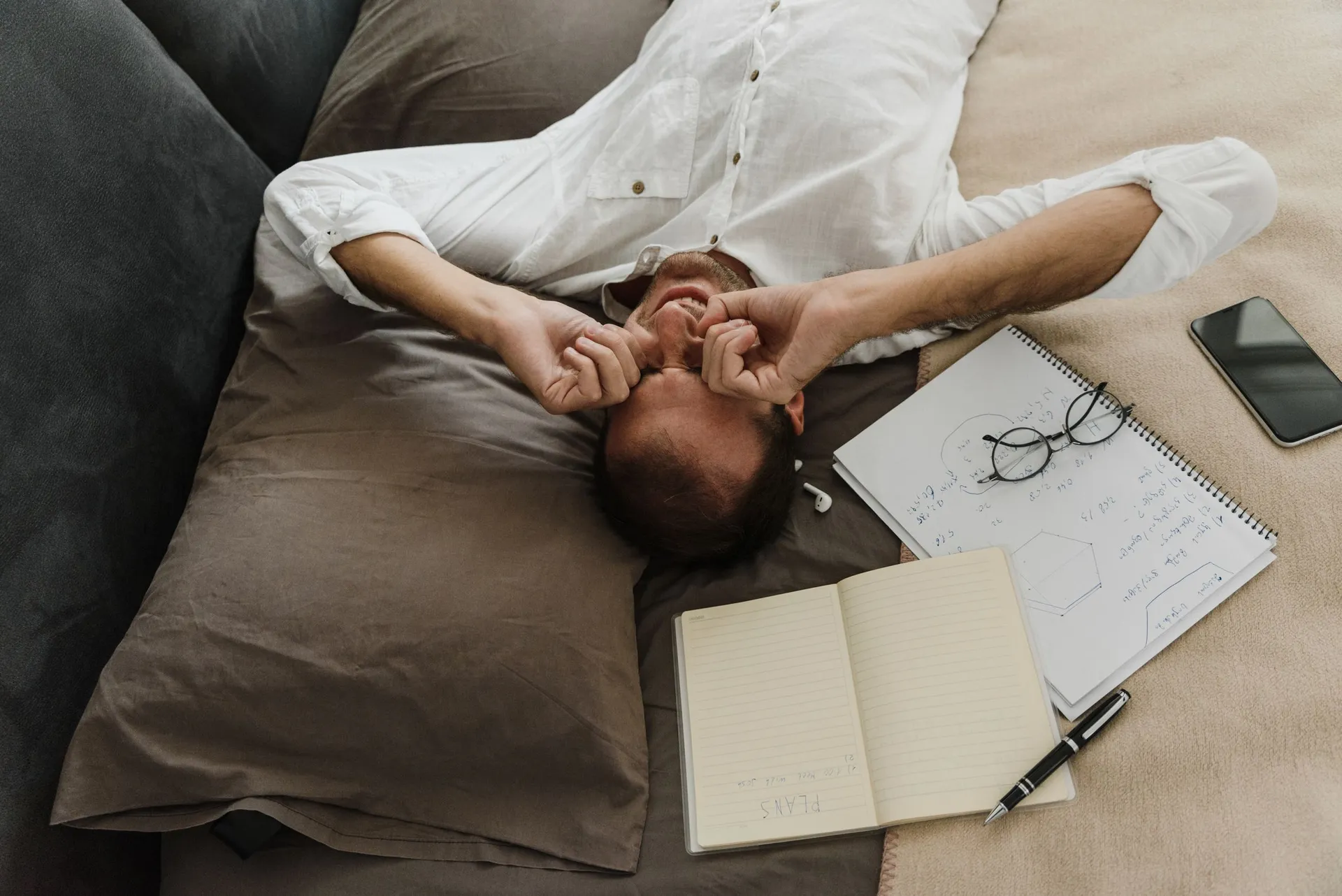
Stress is your body's natural response to pressure or a new challenge. You can usually manage everyday stress by noticing your early signs, looking after your sleep and movement, using a relaxation technique such as slow breathing, and talking to someone you trust. If you still feel overwhelmed, a GP is a good place to start.[1][2]
Feeling stretched is common. In 2025, just over a third of Australians aged 15 and over (34%) said they always or often felt rushed for time, and more than half of women aged 35 to 44 (54.6%) said the same.[4] Read on for the signs of stress, what causes it, 10 everyday ways to bring it down, what to do when work is the cause, and when to get support.
Key takeaways
Stress is a normal response to pressure. It becomes a problem when it lasts a long time or you feel unable to cope.
Common signs include trouble sleeping, sore muscles, headaches, irritability and difficulty concentrating.
Slow breathing, daily movement, good sleep and time with people you trust can all bring stress down.
If you still feel overwhelmed after trying these steps, see your GP. For urgent support, call Lifeline on 13 11 14.
What is stress?
Stress is a common and normal response to challenging or new situations. When you're under pressure, your body releases stress hormones such as adrenaline and cortisol. This is often called the "fight or flight" response, and it keeps you alert and ready to face a challenge.[1]
In healthy amounts, stress can improve your performance and help you get things done. It becomes a problem when it lasts a long time, or when you feel overwhelmed and unable to cope.[1]
Beyond Blue describes stress as a bucket of water. The bucket is your capacity to cope, and the water is the pressures and demands you're dealing with. Most of us carry some water without trouble, but when the bucket fills faster than it can empty, things start to feel overwhelming.[3]
What are the signs of stress?
Stress shows up differently for everyone, so it helps to get to know your own signs.[3] Common signs include:
Your body: Headaches, tight or sore muscles, an upset stomach, changes in appetite, trouble sleeping or feeling exhausted.[1][2]
Your mood: Feeling overwhelmed, on edge or unable to stop worrying, irritable or angry, or having mood swings.[1][2]
Your thinking: Trouble concentrating, forgetfulness or racing thoughts.[3][5]
What you do: Pulling away from friends and family, or relying on alcohol or other substances to cope.[1]
Look out for your body's warning signs, such as a headache, grinding your teeth, clenching your jaw or feeling frustrated.[5]
Stress can also cause shortness of breath, a racing heart or chest pain.[3] Chest pain should always be checked. Call triple zero (000) if you have chest pain that is severe, getting worse or has lasted longer than 10 minutes, feels heavy, crushing or tight, or comes with breathlessness, nausea, dizziness, a cold sweat, or pain in your jaw or down your left arm.[6]
What causes stress?
Everyone is stressed by different things. An event that is very stressful for one person can matter much less to someone else.[5] Common causes include:
work or study pressure, such as deadlines, workload or expectations[5]
money worries[1][5]
relationship or family difficulties[1][5]
illness or health problems in the family[1]
caring for someone else[5]
major life events, such as a death in the family, divorce, a move or a job change[1][5]
feeling isolated, or facing uncertainty or situations you can't control[5]
Stress can come from the inside too. Negative self-talk and feeling that you aren't meeting your own or others' expectations can be very stressful.[1]
Recent Australian figures point to money and work. In 2025, a quarter of households (25%) had at least one cash flow problem in the past year, up from 21% in 2020.[4] More than one in three workers (36.9%) say work affects their sleep on the nights they sleep badly.[7]
10 everyday ways to manage stress
There's no single right way to manage stress, so try a few of these and keep the ones that suit you.[2]
Notice your triggers. Common ones include hunger, tiredness, arguments and deadlines. Knowing yours can help you manage stress.[5]
Slow your breathing. Stress can make you take fast, shallow breaths. Try breathing in slowly for a count of 3 and out for a count of 3. It may help to make the out-breath a little longer.[2]
Relax your muscles. Lie down somewhere quiet and close your eyes. Starting from your toes, tense each part of your body one by one, hold for 3 seconds and release.[2]
Move every day. Daily exercise can reduce stress and help you relax.[2] When stress builds, even a quick stretch or a walk around the block can release tension.[3]
Look after your sleep. Enough sleep lifts your mood and makes stress easier to handle. A bedtime routine with time to relax before bed is a good start.[2]
Go easy on caffeine and alcohol. Cut back on stimulants like caffeine, and avoid using alcohol to bring stress down. If you find yourself turning to alcohol, talk to your doctor.[2]
Break big problems into small steps. Divide a large challenge into smaller parts, focus on the next practical step, and write tasks down in a list or planner.[5]
Keep a regular routine. Consistent times for sleep, meals, work and exercise bring structure to your day and help you feel more in control.[3][5]
Stay connected. Spending time with friends and family can reduce stress, and talking to someone you trust often eases the weight.[2][3]
Try mindfulness. Focus on the present moment: what you can hear and see around you, and how your body feels. This can help stop you getting caught up in stressful thoughts.[2]
A break from scrolling can help too. Stepping back from your phone for a while may help you sleep better and feel more present.[3]
It also helps to set realistic expectations and healthy boundaries, and to make regular time for things you enjoy.[5] Taking time to notice small pleasures can help too, because gratitude helps keep stressful thoughts in perspective.[2]
Managing stress at work
Workplace stress is common. It can come from long hours, deadlines, conflict with others or feeling isolated.[5] A few things can help:
Talk to your manager or HR about your workload or other concerns.[5]
Use your Employee Assistance Program (EAP) if your workplace offers one.[3]
Switch off after hours. Employees covered by the Fair Work Act's right to disconnect can refuse to monitor, read or respond to work contact outside their working hours, unless refusing would be unreasonable. For small business employees, this right started on 26 August 2025.[8]
Take a break. Taking some leave from work, or getting support with stress management, can help you cope better over time.[3]
How stress is linked to sleep, pain and energy
Stress often spills over into your sleep, your body and your energy levels.
Stress can make it harder to fall asleep or stay asleep, as racing thoughts or tense muscles keep your mind alert.[3] A busy mind is the most common everyday factor Australians say affects their sleep (41.1%).[7] You'll find habits that may help in our guide on how to improve your sleep quality.
Ongoing stress keeps muscles tense, which can lead to back, neck and shoulder pain, headaches and body aches.[1] Read more about muscle and body pain.
Living with stress for a long time can leave your mind and body feeling exhausted.[1] If you feel tired all the time, stress is one of several possible causes worth looking at.
What happens if stress keeps going?
Stress that goes on for a long time can affect your whole body.[1] It can:
raise your blood pressure, which over time can lead to heart problems
cause an upset stomach or reflux
wear down your immune system, so you pick up infections more easily and take longer to recover
keep your muscles tense, leading to aches and headaches
lower your sex drive
make your skin oilier and, over time, lead to acne or hair loss[1]
That's why it's worth spotting the warning signs and acting early, before stress builds up.[3]
When to get support for stress
See your GP if:
you've tried relaxation and talking to someone you trust, but still feel overwhelmed[1]
stress is affecting your daily life[2]
your reactions to stress feel extreme or worry you[5]
particular things stress you and feel beyond your control[5]
Stress usually eases once the thing causing it has passed.[3] If worry or low mood hangs around after that, or seems to have no clear cause, let your GP know. Stress isn't a diagnosis in itself, and GPs and psychologists are trained to recognise when you need extra support.[1]
You can also talk to someone straight away:
Lifeline: 13 11 14, or their online chat, for urgent support[2]
Beyond Blue: 1300 22 4636, for confidential counselling at any time of the day or night[3]
Medicare Mental Health: 1800 595 212, for advice and help finding local services[2]
13YARN: 13 92 76, to speak with an Aboriginal or Torres Strait Islander crisis supporter[2]
Kids Helpline: 1800 55 1800, for young people aged 5 to 25[2]
If you're having thoughts of self-harm or suicide, call Lifeline on 13 11 14. If you or someone else is in immediate danger, call triple zero (000).[1]
What a health professional may suggest
A GP can talk through what's going on and make sure any physical health problems are properly managed.[5] A counsellor, psychologist or social worker can also help you work out the source of your stress and find ways to cope.[1] Common approaches include:
Cognitive behaviour therapy (CBT). An evidence-based approach that focuses on how your thoughts and actions affect how you feel.[1]
Structured problem solving. A form of psychological therapy that works out practical solutions to stop stress from building.[1]
Online programs. Options include THIS WAY UP's stress management course and MindSpot's Wellbeing Course. Beyond Blue's Wellbeing Action Plan can also help you work out what suits you.[1]
Before your appointment, it helps to note your main signs of stress, when they started, what seems to trigger them, and how they're affecting your sleep, work and relationships.
Complete a 2 min pre-screening to see if Hellomello is right for you.
We believe your healthcare journey deserves kindness and empathy
Look out for your body's warning signs, such as a headache, a clenched jaw, tense muscles, an upset stomach or trouble sleeping. You might also feel irritable or on edge, or find it hard to concentrate.[1][2][5]
How can I calm down quickly when I'm stressed?
Slow your breathing. Breathe in slowly for a count of 3, then out for a count of 3 or a little longer.[2] A quick burst of movement, like stepping outside or walking around the block, can also release tension.[3]
Can stress make you physically sick?
Yes. Ongoing stress can raise your blood pressure, upset your stomach, cause headaches and muscle pain, and make you more likely to pick up infections.[1] Chest pain should always be checked. Call triple zero (000) if it's severe, getting worse or has lasted longer than 10 minutes, or comes with other symptoms such as breathlessness, nausea, dizziness or a cold sweat.[6]
Is some stress good for you?
Yes, in small amounts. Stress can keep you alert and help you meet a challenge or a deadline. It becomes a problem when it lasts a long time or you feel unable to cope.[1][3]
What's the difference between stress and burnout?
Burnout happens when stress builds up or drags on. It can leave you feeling exhausted and disconnected, and it often affects your performance at work.[3] The World Health Organization describes it as the result of ongoing workplace stress that hasn't been successfully managed, with three main signs: feeling drained or exhausted, feeling distant from or negative about your job, and feeling less effective at work. It isn't classified as a medical condition.[9] Spotting the signs early makes it easier to get back on track.[3]
How do I know if I'm too stressed?
Watch for signs that stress has stopped being useful: feeling overwhelmed or unable to cope, trouble concentrating, changes in sleep or appetite, pulling away from people, or relying on alcohol to cope.[1] If these last, see your GP.
MEDICAL DISCLAIMER
This article is for informational purposes only and does not constitute medical advice. Everyone's circumstances are different, and what works for one person may not work for another. Please consult an AHPRA-registered healthcare professional for advice specific to your circumstances.
References
1.healthdirect. Stress. Accessed 14 October 2026. https://www.healthdirect.gov.au/symptoms/stress
2.healthdirect. Relaxation techniques for stress relief. Accessed 14 October 2026. https://www.healthdirect.gov.au/healthy-living/emotional-wellbeing/relaxation-techniques-for-stress-relief
3.Beyond Blue. Stress and mental health. Accessed 14 October 2026. https://www.beyondblue.org.au/mental-health/what-is-stress
4.Australian Bureau of Statistics. General Social Survey: Summary Results, Australia, 2025. 6 May 2026. https://www.abs.gov.au/statistics/people/people-and-communities/general-social-survey-summary-results-australia/2025
5.Better Health Channel, Victorian Department of Health. Stress. Accessed 14 October 2026. https://www.betterhealth.vic.gov.au/health/healthyliving/stress
6.healthdirect. Chest pain. Accessed 14 October 2026. https://www.healthdirect.gov.au/symptoms/aches-and-pains/chest-pain
7.Sleep Health Foundation. Work stress fuelling Australians' poor sleep, new Sleep Health Foundation data reveals. 3 August 2026. https://www.sleephealthfoundation.org.au/news-and-articles/work-stress-fuelling-australians-poor-sleep-new-sleep-health-foundation-data-reveals
8.Fair Work Commission. What is the right to disconnect. 26 August 2025. https://www.fwc.gov.au/workplace-disputes/other-workplace-disputes/right-disconnect-disputes/what-right-disconnect
9.World Health Organization. Burn-out an "occupational phenomenon": International Classification of Diseases. 28 May 2019. https://www.who.int/news/item/28-05-2019-burn-out-an-occupational-phenomenon-international-classification-of-diseases